Every year, SEO is changing. As Google continues to introduce new ranking signals, artificial intelligence changes the way that users search for data and various sites jostle more fiercely than ever for visibility. Due to these rapid updates, the businesses and website owners always stay in search of useful SEO tools to understand current optimization practices.
A name that has gotten some notice recently is SEO by HighSoftware99. com. This site starts with exposed whoopi model information, and a lot of users find this site when seeking solutions for existent SEO tips, optimization techniques and search engine marketing strategies. So, are the readers really just looking for a bunch of random SEO tips and tricks or something that is useful, compared with existing solid theories building pressure to the current SEO standards followed and how can they use it on their website?
This is a detailed guide to SEO concepts related to SEO HighSoftware99. com. Instead of outdated ranking hacks, you rely on established optimization principles built for modern search engines. With this in mind, here are a few principles that should help you out with the long-term SEO for your business website, eCommerce store, blog and portfolio site.
When you finally finish this guide you will know how modern SEO really works, why technical optimization is important, how content quality affects rankings and the preservation practices that are worth focusing on in 2026.
Why SEO Still Matters in 2026
The same people are accessed by millions of websites every day. An excellent website without doing SEO is a good thing for nobody – it stays hidden from any potential visitors. Optimization is no longer just about keywords since search engines want to present the most relevant, reliable and user-friendly results.
Today SEO embodies several areas of expertise, and they follow:
Technical website performance
User experience
Helpful content
Search intent optimization
Website authority
Mobile usability
Structured data
Internal linking
Content freshness
The more revealing update is that Google’s ranking systems are able to reward sites with expertise, experience, authoritativeness and trustworthiness (E-E-A-T). This means that quality optimization has never been more valuable.
Successful websites do NOT search for shortcuts or quick systems to rank higher they provide value in the long run.
What Is SEO by HighSoftware99. Com?

SEO by HighSoftware99. com is a compilation of content optimized for the world of SEO, detailing lessons learned through website optimization, search visibility and best practices to follow in digital marketing. Typically, readers are looking for practical aspects of how the site can do better in organic search.
The content further suggests that instead of thinking about SEO like a task, it should be treated as an iterative process involving innumerable subtle improvements to countless inputs on a website.
This includes some of the core topics related to the platform:
Understanding Search Engine Optimization
SEO means optimising certain aspects of a website to help search engines understand, crawl, index and rank its pages more effectively.
When it comes to optimization, there are usually three main areas of optimization:
On-Page SEO
On-page SEO optimizes individual pages by:
High-quality content
Proper heading hierarchy
Keyword optimization
Meta tags
Image optimization
Internal linking
Readability improvements
These components allow search engines to decipher the relevance of every page but they also increase the user experience itself.
Technical SEO
Technical SEO is the art of structuring a website to assist search engines in crawling and indexing it effectively.
Key technical factors include:
Fast page loading
Mobile responsiveness
HTTPS security
XML sitemaps
Robots.txt configuration
Canonical URLs
Schema markup
Crawl efficiency
Even the most compelling content will not be able to achieve its ranking potential if you do not have technical SEO in place.
Off-Page SEO
Off-Page SEO involves signals that are the result of actions taken outside the website.
These include:
High-quality backlinks
Brand mentions
Digital PR
Online authority
Trust signals
Backlink profile strength continues to be a top ranking factor, but quality is now more valuable than quantity.
Understanding the Modern SEO Landscape
The way we did SEO 10 years ago compared to what it is today.
Websites used to rank by: — years ago
Stuffing keywords
Buying thousands of backlinks
Publishing thin content
Creating duplicate pages
Today, using these tactics in most cases leads to at least poor performance or even a penalty from the search engine.
In contrast, short interactions with subtle SEO techniques are proved to be successful:
Search Intent
But actually knowing what users are looking to find when searching.
For example:
Someone searching
best SEO software
is looking for comparisons.
Someone searching
how to fix crawl errors
I want a tutorial.
The closer you are to matching search intent, the higher your ranking signal in Google.
Helpful Content
Modern algorithms prefer substance that richly answers questions over simply rehashing keywords.
Helpful content should:
Solve problems
Answer common questions
Include examples
Provide actionable advice
Stay updated
Deep, informative content tends to perform better than surface-level articles.
User Experience
Both act as a signal that helps Google determine how users interact with websites.
Important UX signals include:
Easy navigation
Fast loading speed
Mobile compatibility
Logical page structure
Clear typography
Minimal intrusive ads
A more pleasant user experience frequently results in better engagement and stronger search engine performance.
Core Principles Behind Effective SEO
Even if you have been doing it according to SEO by HighSoftware99. From the writings at SEO — By SEOMUSATION. com, or any SEO resources you can rely on, a few principles are always there and contribute to your long-term sustainable success as they have stood the test of time over multiple decades.
Create Content for People First
Always remember, the primary key is to help other people.
Content should:
Answer questions clearly
Provide accurate information
Be easy to understand
Offer practical value
Search engines are rewarding pages that satisfy users, not target keywords.
Build Topical Authority
While random blogs tend to publish articles on a whim, profitable websites ensure they cover an entire subject extensively.
Say a website in the SEO industry might write guides like:
Keyword research
Technical SEO
Link building
Local SEO
Content optimization
Core Web Vitals
AI in SEO
Website audits
Taking this all-encompassing route establishes authority within a niche.
Advanced Technical SEO Framework

Technical SEO is where the foundation of every successful website is built upon. The best of the best may fail to rank if crawler bots are unable to crawl, understand and index it properly. A well-implemented and organized website can offer better experience for the user, as well as for search engine spiders.
For comparison, as discussed here SEO by HighSoftware99. One common theme in all these resources is not to consider technical optimisation as an afterthought, you’ll miss out big time — (for example, Blog post on Moz. That establishes the content, authority & user experience.
Website Architecture Matters
If your website structure is clean, visitors can easily navigate and the search engines can crawl it without much hassle.
Generally a strong architecture follows the principles described as such,
Clear navigation menus
Logical page hierarchy
Short URL paths
Organized categories
Simple internal navigation
Example:
Home
├── SEO Services
│ ├── Technical SEO
│ ├── Local SEO
│ ├── Ecommerce SEO
│
├── Blog
│ ├── SEO Guides
│ ├── Link Building
│ ├── AI SEO
│
└── Contact
It helps search engines better understand how pages are related.
Improve Crawlability
Google discovers pages through links.
If crucial pages are hard to access, they may be seen as less valuable by search engines.
To improve crawlability:
Fix broken links
Remove redirect chains
Avoid orphan pages
Maintain an updated XML sitemap
Use descriptive internal links
Eliminate unnecessary duplicate URLs
Use regular technical audits to fix crawl problems before they cause ranking issues.
Optimize Page Speed
Speed has evolved as the most critical ranking factor of your website.
Pages are expected to load before your visitors can even finish yawning. Slow websites often experience:
Higher bounce rates
Lower engagement
Reduced conversions
Poor mobile experience
Some effective optimization methods include:
Compress Images
Heavy images slow down loading speed.
Use:
WebP format
Proper image dimensions
Lazy loading
Responsive images
Minify CSS and JavaScript
Eliminating unneeded code decreases file size.
Optimization can include:
Minifying CSS
Compressing JavaScript
Removing unused code
Combining small files where appropriate
Enable Browser Caching
Since cached resources are stored on your own machine, caching allows visitors returning to type pages more speedily.
Use a Reliable Hosting Provider
Across slow servers, even perfectly optimized websites fail.
Reliable hosting improves:
Response time
Website stability
Security
Overall SEO performance
Mobile-First Optimization
Google crawls the mobile version of websites and not desktops.
Every page must be functional on:
Smartphones
Tablets
Desktop computers
Important mobile considerations include:
Responsive layouts
Readable fonts
Clickable buttons
Fast loading
No horizontal scrolling
Rankings suffer because of a poor mobile experience despite desktop performance.
Understanding Core Web Vitals
Core Web Vitals is all about measuring real-world user experience.
The three primary metrics include:
Largest Contentful Paint (LCP)
Measures loading performance.
Target:
Less than 2.5 seconds
Interaction to Next Paint (INP)
Measures responsiveness.
Users expect pages to respond well after interactions.
Lower values indicate better responsiveness.
Cumulative Layout Shift (CLS)
Measures visual stability.
Buttons or text that move unexpectedly between views make for bad UX.
Target:
Less than 0.1
Fixed layouts Enhance usability and trust
Keyword Research Beyond Search Volume
Most beginners will obviously target high-volume keywords.
With professional SEO, you have a more holistic view on what to do.
Effective keyword research considers:
Search intent
Competition
User journey
Business relevance
Conversion potential
The most highly searched keyword is not the best.
Types of Keywords
Informational Keywords
Users want answers.
Examples:
What is technical SEO?
How does Google ranking work?
SEO checklist
These keywords build topical authority.
Commercial Keywords
Users compare solutions.
Examples:
Best SEO software
SEO tools comparison
Technical SEO services
Not too many commercial searches produce a qualified flow of traffic.
Transactional Keywords
Users intend to take action.
Examples:
Buy SEO audit
Hire SEO expert
Local SEO agency
Those keywords usually have a higher conversion rate.
Navigational Keywords
User queries a specific website or a brand
Example:
Branded pages can help quickly direct users to the desired content and information related to it.
Building Content Around Search Intent
Each keyword represents a predetermined aim.
Before writing an article, ask:
What does the searcher want?
What is the problem they are trying to solve?
Which of these formats answers the question best?
Possible formats include:
Tutorials
Reviews
Comparisons
Checklists
Case studies
Complete guides
Intent matching will give you a better rank than keyword repeating.Timeout is not about strip search, it means to consider whether the few answers presented are efficient or structural.
Creating SEO-Friendly Content
Readers first, search engines second.
A high-quality article generally includes:
Clear introduction
Logical heading structure
Helpful explanations
Real examples
Practical advice
Frequently asked questions
Strong conclusion
Stop chasing keyword density and instead cover the subject naturally.
Optimize Heading Structure
Proper headings improve readability.
Example:
H1
H2
H3
H3
H2
H3
H3
Avoid skipping heading levels unnecessarily.
Every part should add in something relevant to the subject.
Write for Humans
Modern SEO values readability.
Good writing typically includes:
Short paragraphs
Simple language
Active voice
Natural transitions
Practical examples
Easy to read pages keep readers for longer.
Internal Linking Strategy
Not only do internal links allow search engines to see what pages are related, but they help users find valuable content.
Benefits include:
Better crawling
Improved page authority distribution
Longer session duration
Lower bounce rates
Such as an article on keyword research could probably link to guides on technical SEO, on-page optimization, or content strategy.
Make it descriptive — Anchor text should describe the destination page rather than generic phrases such as “click here.
Optimizing Images for SEO
Images are great for the user, but they also help you get discovered.
Best practices include:
Descriptive File Names
Instead of:
IMG12345.jpg
Use:
technical-seo-checklist.webp
Alt Text
Alt text allows search engines to interpret the content of images, in addition to improving accessibility.
Alt text should describe the image in a natural way and not fill it with keywords.
Compression
Large image files slow websites.
Optimized images improve:
Loading speed
Mobile experience
User satisfaction
Building Authority Through Quality Content
Websites with real expertise and trust are increasingly rewarded by Google.
To strengthen authority:
Publish original research when possible.
Update outdated articles regularly.
Cite reputable sources.
Avoid duplicate or AI-generated filler.
Dig deep rather than scratching the surface of a topic
Consistency over time instills confidence in users and search engines.
How AI will shape SEO in 2026: Intelligent optimization and outcomes
Website creation, optimization, and discovery are being transformed by artificial intelligence. Whether it is for keyword research or content planning, AI-powered tools assist marketers in discovering opportunities that are hard to uncover manually and speed up the entire process.
But AI should not replace your SEO strategy, it should support it. Search engines still value content that showcases actual expertise, experience and relationship-driven utility.
You are trained by SEO from HighSoftware99 com, merging AI efficiency with human insight. Top pages answer real user questions with accurate, practical info.
AI in SEO | Best Practices
Conduct Research and Brainstorm with AI
All articles reviewed and curated by human experts.
Incorporate unique insights, examples, and case studies.
Content is relevant to the latest SEO trends.
Don’t publish something brown text or generic repeat this advice.
This results in content that is both scalable and trustworthy.
Understanding Google’s E-E-A-T Framework
E-E-A-T, which stands for one of the most vital concepts in modern SEO:
Experience
Expertise
Authoritativeness
Trustworthiness
These signals are also what Google relies on to determine if a page may have credible information.
Experience
Readers want something from a person who has used the tool, run the website, or solved the problem.
Include:
Real-world examples
Practical workflows
Lessons learned
Personal observations (where appropriate)
Experience helps build credibility.
Expertise
You need to show your authority on the subject matter.
Ways to show expertise include:
Explaining technical concepts clearly
Using accurate terminology
Providing actionable advice
Covering the topic comprehensively
Avoid vague or surface-level explanations.
Authoritativeness
Quality compounds over time leading to Authority.
You can praise your authority by:
Publishing high-value content regularly
Earning mentions from reputable websites
Building a recognizable brand
Sharing original research or insights
Authority is earned, not claimed.
Trustworthiness
Trust is one common element of consideration for both users and search engines.
Build trust by:
Using HTTPS
Providing clear contact information
Being transparent about authorship
Keeping content accurate and updated
Avoiding misleading headlines or claims
A reliable website help you visit it again, and has a better relation with its visitors.
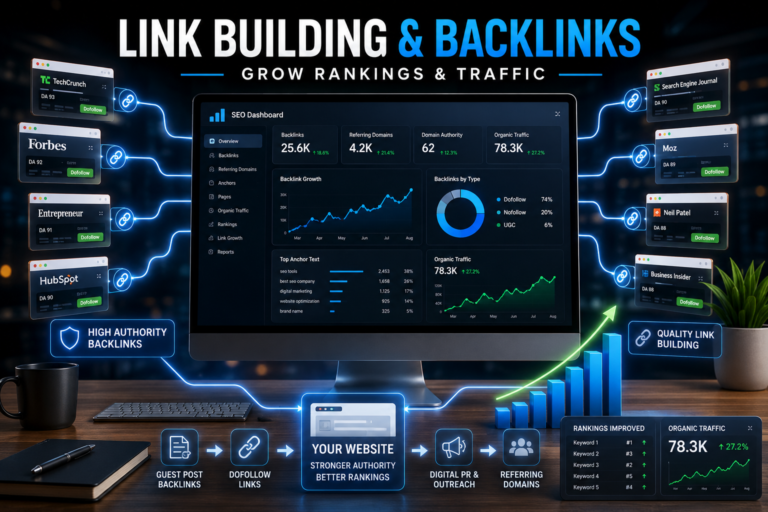
Importance of Link Building in SEO
Other Considerations: Backlinks are still one of the largest ranking signals in Google, but only if they come from relevant, authority pages.
Do not just chase a hundred links, instead focus on earning quality links.
Effective Link Building Strategies
Publish original research or data
Create in-depth guides
Submit guest posts to quality sites
Build relationships with industry publications
Promote content through digital PR
High quality, editorially earned links are significantly more valuable than low-quality or spam backlinks.
What Makes a High-Quality Backlink?
All backlinks are not equal.
Stay away from links which originate on sites that feature;
Strong topical relevance
Genuine organic traffic
High editorial standards
Good reputation
Contextual placement within content
A handful of high page rank links will go further than hundreds from low authority domains.
Local SEO for Businesses
As long as you are doing business with customers in a certain locality, local SEO must be incorporated in your strategy.
Key local SEO practices include:
Optimize your business profile.
Make sure your Business Name, Address & Phone Number stay the same
Encourage genuine customer reviews.
Create location-specific landing pages.
Include local Keywords in the content of your website naturally.
Effective local optimization enhances the visibility in both map results and location-based searches.
Measuring SEO Success
SEO is an ongoing process. Key performance indicators (KPIs) gives you insight into whether your efforts are successful or not, so keep an eye on them.
Organic Traffic
Monitor the number of visitors coming from search engines.
Consistent growth usually means that your SEO strategy works.
Keyword Rankings
Track key target keywords over time.
You should train yourself not only to think about ranking first — you have to look for steady growth in many relevant terms.
Click-Through Rate (CTR)
CTR is a measure of how frequently people click on your page when they see it in SERPs.
Improve CTR by writing:
Compelling titles
Clear meta descriptions
Relevant page summaries
Bounce Rate and Engagement
Although none of these engagement metrics will definitively determine where in the rankings you appear, knowing how users are interacting with your content can help pinpoint areas that need improvement.
Your aim to create pages that will make the visitors →
Read more
Explore related content
Invest time in your site that counts
Conversion Rate
The traffic is not valuable if it doesn’t align with your goals.
Conversions could include, depending on your website:
Contact form submissions
Product purchases
Newsletter sign-ups
Quote requests
Downloads
SEO success is business growth at the end of the day.
Common SEO Mistakes to Avoid
Health CheckAll website owners, seasoned or not, can make performance-limiting mistakes.
Publishing Thin Content
Short, unworthy pages are not the most successful ones.
Concentration on depth, clarity, and usefulness.
Ignoring Technical Issues
Reduced visibility – Broken links, crawl errors and slow loading speeds.
Conducting regular technical audits makes sure that your website is in a good health.
Keyword Stuffing
Over-using the same keyword is bad readability which can lower your content quality.
Include keywords naturally in quality content
Neglecting Content Updates
SEO is not a one-time task.
Refresh important pages regularly by:
Updating statistics
Improving explanations
Adding new examples
This includes section expand based off of need-based learning
New content is usually better for the long-term.
Weak Internal Linking
Pages that live outside of your websites main section may not be discovered very easily.
Link related articles together using meaningful anchor text to provide context and a continued path for users, not just to spread authority.
Building a Long-Term SEO Strategy
SEO is not a shortcut, it all comes down to consistency.
A sustainable strategy typically includes:
Regular content publishing
Technical maintenance
Ongoing keyword research
Internal linking improvements
Backlink acquisition through quality content
Performance monitoring
Continuous optimization based on data
Treat SEO as a continuous investment and not just a one-time project.
Frequently Asked Questions
What is SEO by HighSoftware99. com?
SEO by HighSoftware99. Set in a voice concerned with present-day principles of SEO conceptions, building up a higher comprehension of how to curate the content based on search engine optimization methods for boosting web site velocity and website traffic organically.
Is SEO only about keywords?
Absolutely not. Modern SEO is only partially about keywords, it encompasses technical performance, UX, content quality, authority, mobile-friendliness, structured data and many more factors.
Time it takes for SEO to work
SEO is a long-term strategy. Depending on competition/website quality and consistency, you won’t see significant changes for several months.
Does AI replace SEO experts?
No, AI is an excellent research and productivity assistant but human expertise is still required when it comes to producing insightful, trustworthy content with the user in mind.
Why is technical SEO important?
A technical SEO strategy allows Search Engines, such as Google, to effectively crawl, comprehend, and index your short-form website. Even great content may struggle to rank without strong technical foundations.
Final Thoughts
The landscape of SEO is always changing, but at the end of the day the point of SEO hasn’t changed: showing users near and far content that they are looking for, that can help them. As this entire guide has explored, optimization is not about shortcuts or tricking the algorithm but rather investing time into a foundation of technical excellence and quality content to earn trust over time.
You are learn from seo by HighSoftware99. You are with data that is up to October 2023 be it with Altcoin-news.com or other classic sources, it is best to remain true to long term value. Focus on user experience, write helpful content that actually answers questions, structure the site well and keep up with big changes to search engine algorithms.
You can build an SEO strategy that will be effective well past 2026, simply by laying a foundation with robust technical fundamentals, smart content planning, ethical link building and improvement over time.