In today’s world of online shopping, website speed is a key factor. Users expect a website to load instantly when they open it. They will leave your website without hesitation if it takes too much time. This behavior has a direct impact on your ranking, traffic and overall success. Quick links can be a powerful way to speed up your website. They make it easier for users to navigate, they reduce confusion and they improve the overall experience of your website. When used correctly, they improve the user experience and send strong signals to search engines like Google.
What Are Quick Links
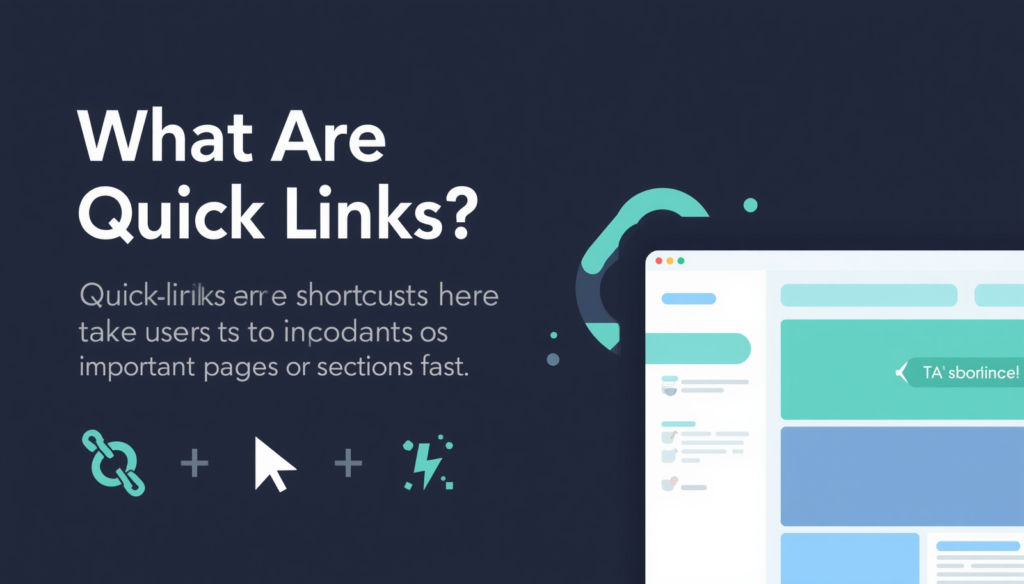
These links take the user directly to the important sections of your site without having them search for it or scroll down too much. These links are shortcuts to help users get where they need to go. Instead of reading the entire page, users can click on a quick-link to go directly to a product, service or section. It saves both time and effort. Quick links are also important from an SEO perspective, as they help search engines determine which pages are most important. This improves indexing, ranking, and rankings.
Why Website Speed Matters for SEO
Google uses website speed as a ranking factor. It is not only about the user’s comfort. A faster website provides a better user experience that keeps users engaged, and lowers bounce rates. Google will give your website a higher ranking in search results if users spend more time on it. A slow website will lose visitors very quickly and send negative signals. Quick links reduce the amount of time that users have to spend searching for information, so your website will feel faster even though the load speed may be average.
How Quick Links Improve Website Performance
Navigation is made easier with quick links. Users will interact with your content more when they can easily navigate between pages. This will increase page views and the session time. Search engine crawlers will also be able to index and discover your pages easily because they are all connected. Quick links reduce frustration for users, improving overall engagement. These factors all work together to improve your website’s performance.
Quick Links for SEO: Advanced Guide
Quick links are useful at the basic level, but advanced strategies will take your SEO to the next stage. First, you need to create a strong internal link structure that connects high-authority content with less visible or newer pages. This will help distribute link equity throughout your website. Use anchor texts that are keyword-rich, but not over-optimized. This will help search engines understand the subject of each page linked without being over-optimized. One advanced technique is to insert quick links within your content in a context that adds real value to the reader, rather than looking forced. This increases engagement and the likelihood that users will visit more pages. Google Analytics is a great tool to use to track user behavior and see which links are most clicked. You can then optimize these links. Combining quick links with SEO techniques such as site structure, loading speed and mobile optimization will ensure maximum impact. These advanced methods, combined with other strategies such as White Hat Backlinks and External Backlinks will make your website more authoritative and easier to navigate. This will help you achieve better rankings and long-term success in SEO.
How to Setup Quick Links for Website Navigation Improvement
The right quick links can make all the difference to how your users feel about your website. First, you need to determine which pages are most important, like your services, products or blog categories. You should then add simple and clear quick links to your header, footer and content, so that users can access these areas without having to search. Use anchor text that is easy to understand so visitors know instantly where the link takes them. To improve user experience and search engine optimization, you should organize your links in an organized manner. Make sure that your quick links are mobile friendly, easy to use, and well spaced. Check your links regularly to make sure they are not broken. Broken links can affect your ranking and user confidence. Quick links, when used correctly, not only increase navigation speed, but also allow search engines to crawl your site more efficiently. This leads to a better ranking on Google and a higher visibility.
Quick Links Optimization Techniques Google Rankings
Optimizing quicklinks is an easy way to increase your website’s ranking and visibility on Google. First, use natural keywords in your anchor texts so that search engines can better understand your pages. Linking to only important pages and those that are related will help you create an internal linking structure which improves indexation and crawlability. Keep your quick links simple and to the point, as too many can confuse users and decrease their effectiveness. Place your links in areas that are easily visible, such as the header, content, or at the end, so that users can find them. A second tip is to make sure all links work properly. Broken links can have a negative impact on both SEO and user confidence. Optimizing quick links to make them easily accessible and visible on mobile devices will also improve the user experience. This is an important ranking factor. Well-optimized links, when combined with strategies such as White Hat Backlinks and Backlink Boosters can boost your Google ranking and overall website performance.
What type of quick links should you use?
You can choose from a variety of quick links depending on the structure of your website. Header links, which are at the top of the page and most visible, help users navigate quickly to key sections. Footer links can be used to provide extra navigation on the bottom of the webpage. Blogs often use sidebar links to direct readers to related content. Within articles, in-content links help users discover more information. A mix of both types can create a structure that is user-friendly and strong.
Use Quick Links with Care
Quick links should be used carefully to get the best results. Keep them simple, limited and easy to understand so that users don’t feel overwhelmed. Avoid complex words and make the anchor text clear. The placement of links is important. Links should be placed where users are likely to look, like at the top of the page or in content. By regularly checking and updating your links, you can ensure that there are no broken paths which could harm SEO or user trust.
Quick Links and Internal Linking Strategies
They are an important part of internal links, one of the most powerful SEO strategies. They connect pages on your website in an effective way. Search engines can then understand the structure of your website and how authority is distributed across different pages. An internal linking structure that is well thought out keeps users interested and encourages further exploration. Combining Backlink Boosters with other strategies will give your website even greater strength in the search engine results.
Role of external links in SEO
External links are external links that point to another website and give credibility to the content. Linking to high-quality resources shows that you have researched and sourced your information. White Hat Backlinks help you to ensure that your website is compliant with Google’s guidelines, and will not be penalized. Creating strong external backlinks increases your domain authority, which helps you to rank higher. To maintain trust, these links should be used in a natural way.
Mobile Optimized Quick Links
Quick links should be optimized for smaller screens, as most users browse the web on their mobile devices. Links must be large enough for users to easily tap and well spaced to prevent accidental clicks. Mobile users prefer a clean, simple design. Quick links can be used.
Mobile-friendly websites improve the user experience, and they help you to rank better on mobile searches.
Avoid these Common Mistakes
Quick links can be used in a way that reduces their effectiveness. Too many links can make navigation more difficult and confuse users. Broken links can damage your credibility and SEO. Inappropriate links can reduce user confidence due to poor placement. By avoiding these mistakes, you can ensure that your quick links are of real value.
How to make your website super fast
You should combine advanced optimization techniques with quick links to achieve expert-level performance. Compressing images can reduce load time while lazy loading allows content to be loaded only when necessary. Using a content delivery network (CDN) helps deliver your website faster across different locations. By removing unnecessary code from CSS and JavaScript, you can improve speed. Hosting speed is also important. Together with quick links these techniques create a powerful, fast website.
How Quick Links Enhance User Experience
The user experience is a major factor in SEO success. Quick links reduce the amount of effort required to navigate a website and save time. Users who can easily find the information they are looking for feel more satisfied, and they’re more likely to return or stay longer. A simple and easy navigation system encourages trust and engagement, which improves ranking.
Real-Life Success Stories of Quick Links
Quick links are used by many successful websites to enhance performance. They are used by e-commerce sites to quickly guide customers to categories and products. Blogs use quick links to link related articles and engage readers. Quick links are used by business websites to guide visitors to contact and service pages. These examples demonstrate how effective and powerful quick links can be if used correctly.
Conclusion
They may appear simple, but quick links have a significant impact on your site. They increase speed, navigation, the user experience and SEO performance at the same. The results are even more powerful when combined with strategies such as White Hat Backlinks and External Backlinks. Start using smart, structured quick links if you want to improve your website’s performance and rank.
FAQS
What are quicklinks in SEO?
Quick links help users quickly navigate to the most important sections of a site.
Do quick links improve website speed?
The perceived load time is reduced because the user can find the content more quickly, even though the actual loading time remains the same.
Are quick links important for ranking?
They improve the user experience on your site and they help search engines crawl it more efficiently.
How many quick links can I use?
Use only relevant and important links to make your website easy to navigate.
Can quick links increase traffic?
Better navigation can increase engagement and traffic.